

 |
|---|
 |
 |
 |
 |
 |
 |
 |
 |
MULE DEER
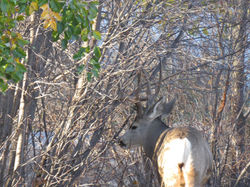
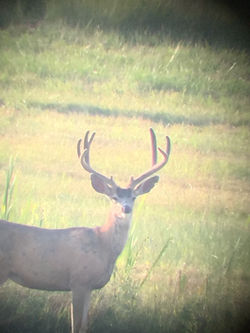
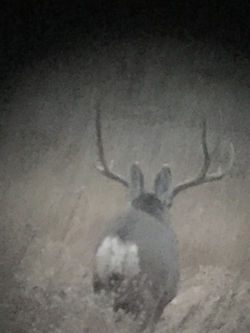
There are two species of Deer in Colorado and Wyoming; mule deer (Mulies) - with their rope-like tails, evenly forked antlers and extravagant ears. White-tails - with smaller ears, antlers with a single main beam bearing smaller tines, and , of course, broad white tails. Mule deer bound with stiff-legged gait, the tail held down; white-tails move with a graceful lope, the flag-like tail held erect.
Both species of deer are four to six feet long and stand three feet or more high at the shoulder. Weights of large bucks range over 400 pounds, but does are only half that size. Adult males begin to grow antlers in spring, used in a clash for dominance and breeding rights in autumn. Antlers are then shed in winter.
Mule deer are abundant statewide. White-tails have become increasingly common in streamside woodland and nearby crop lands along the rivers of the eastern plains.
Mule deer occupy any "edge" habitat, including suburban residential areas.
Deer are browsers, feeding mostly on woody vegetation, including twigs and leaves of shrubs and trees, including ornamentals. They also forage on crops, especially corn. Because they eat little grass, they tend not to compete seriously with livestock or elk.
Licensed hunters take 50,000 to 80,000 deer annually in the state from a population estimated at 700,000 animals statewide. Deer breed from October to December. After a gestation period of six and a half months, spotted young (usually twins) are born. Deer are frequent traffic casualties, and mountain lions, coyotes and packs of feral dogs prey upon them.